
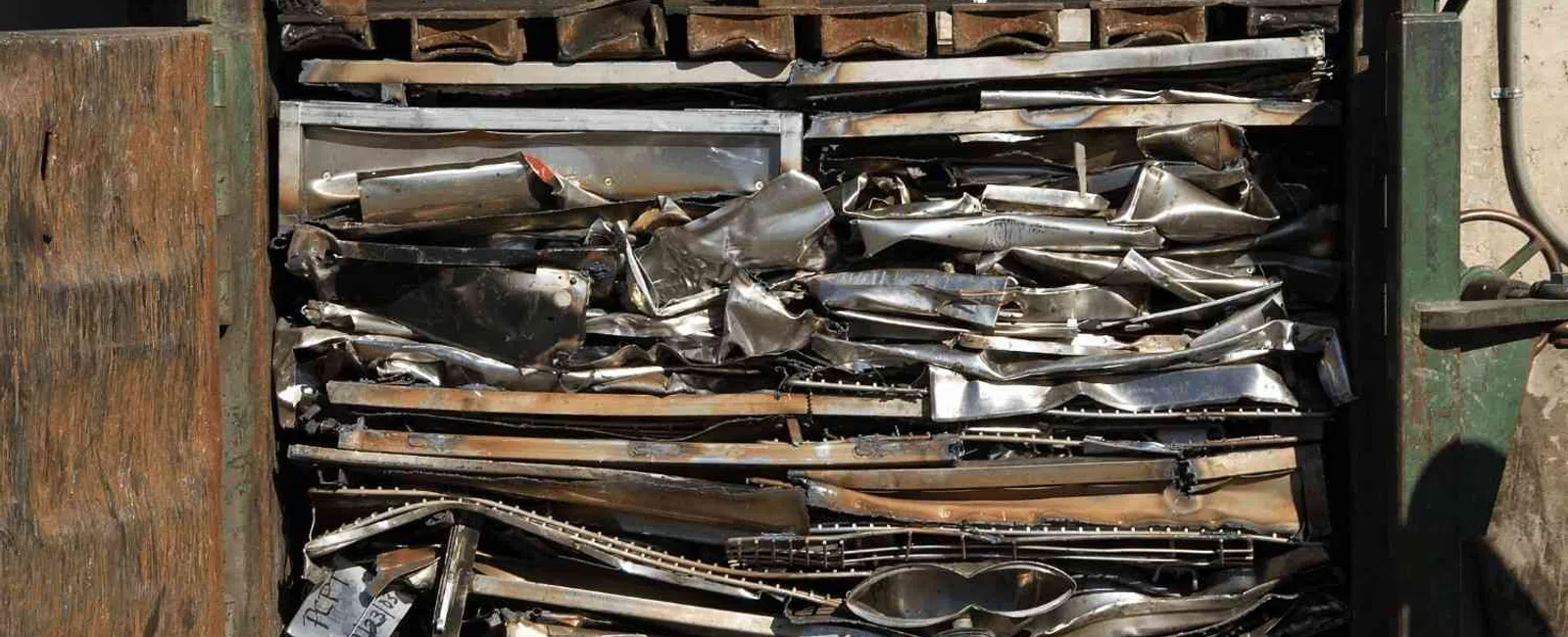
Loose scrap eats up space, slows down loading, and costs you money every time a half-empty truck rolls off the lot. A scrap metal baler fixes that by turning sprawling piles into dense, stackable, mill-friendly bales.
What a Scrap Metal Baler Actually Does
A metal baler uses a hydraulic ram to compress loose ferrous and non-ferrous scrap into a uniform block. Material goes into the charge box, the ram drives in thousands of pounds of force, and out comes a dense bale that holds its shape through handling and transport. That is the whole idea behind scrap reduction: shrink the volume, raise the density, and make every cubic foot of yard space and every truckload work harder.
Denser bales do more than tidy up the yard. They load faster, ship heavier within legal limits, and tend to earn a better price at the mill because clean, consistent bales melt more predictably. Less loose material also means fewer sharp edges and trip hazards underfoot. For most yards, that combination of higher per-load value and lower handling costs is the entire business case for owning a baler in the first place.
Baler vs Logger: What Is the Difference?
A scrap baler compresses material into a rectangular block, usually for lighter and mixed grades. A logger compresses long, bulky ferrous scrap, such as pipe, structural steel, and sheet, into a compact cylindrical log. Many of the most useful machines in a yard are combination shear/baler/loggers, which can shear oversized pieces down to size and then bale or log them in a single workflow.
Balers favor density and tidy blocks, loggers favor handling heavy, awkward ferrous material that would never fit a standard charge box. Plenty of yards run both, or run a combination unit to cover the range. If your intake swings between light non-ferrous one week and structural steel the next, that flexibility is worth real money.
The Main Types You Will See in a Yard
Most scrap operations end up choosing among a handful of configurations:
- Two-Ram Balers. Strong for dense aluminum and copper bales and mixed non-ferrous, with a second ram that ejects clean, consistent bales at high throughput.
- Shear Baler/Loggers. Built for heavy ferrous scrap, cutting and compressing pipe, beams, and plate so the material ships mill-ready.
- Portable (Mobile) Logger-Balers. Mounted to travel, so you can process material onsite at demolition jobs or satellite yards instead of hauling loose scrap home first.
- Stationary Horizontal Balers. Permanently installed and often fed by a conveyor, ideal for a steady, high-volume stream where throughput matters more than mobility.
How to Match a Baler to Your Yard
The right machine comes down to what you process and how much of it you process. Run through these factors before you shortlist anything:
- Material Mix. Heavy ferrous favors a shear/logger; light non-ferrous and mixed grades favor a two-ram or horizontal baler.
- Volume and Throughput. Match cycle time and bale output to your daily intake so the baler keeps up instead of becoming the bottleneck.
- Mobility. If you work job sites or multiple yards, a portable logger-baler can pull material prep to the source.
- Footprint and Power. Confirm the unit fits your space, electrical service, and material flow before it ever arrives.
- Target Bale Spec. Your mill and freight requirements drive the bale size, density, and shape you need to hit.
Getting this match right is where a lot of yards either save money for a decade or fight an undersized machine every shift. It is also why it pays to talk through your material stream with a specialist rather than buying off a spec sheet. The team behind a yard's scrap metal processing operations should weigh in before the purchase, not after.
Why Baling Pays Off
When the machine fits the material, the returns show up across the operation:
- Denser loads mean fewer trucks and lower freight cost per ton
- Clean, uniform bales often command a stronger price at the mill
- Reclaimed floor space lets you store and process more without expanding
- Less loose scrap underfoot means a safer, more organized yard
Those gains compound for ferrous and non-ferrous handlers alike, which is why baling sits at the center of most metal recycling and processing workflows.
When to Bring in Crigler
A baler is a long-term investment, and the wrong size or configuration is expensive to live with. Crigler Enterprises has spent more than 50 years helping scrap yards and metal processors across Georgia, Florida, and Alabama choose, install, and maintain the right equipment. As an authorized distributor for leading baler brands, we carry a broad range of balers and keep a rotating selection of new and used machines ready to ship.
Beyond the sale, our system design and installation team sizes each setup to your material stream and footprint, and the largest service fleet in the Southeast keeps it running for the long haul.
Find the Right Baler for Your Operation
Not sure whether your yard needs a two-ram baler, a shear/logger, or a portable unit? Tell us what you process and how much you process, and we will help you match the machine to the work. Contact us online or call us today to request a consultation, browse our current inventory, or reach our service team to keep your existing equipment at full output.


