
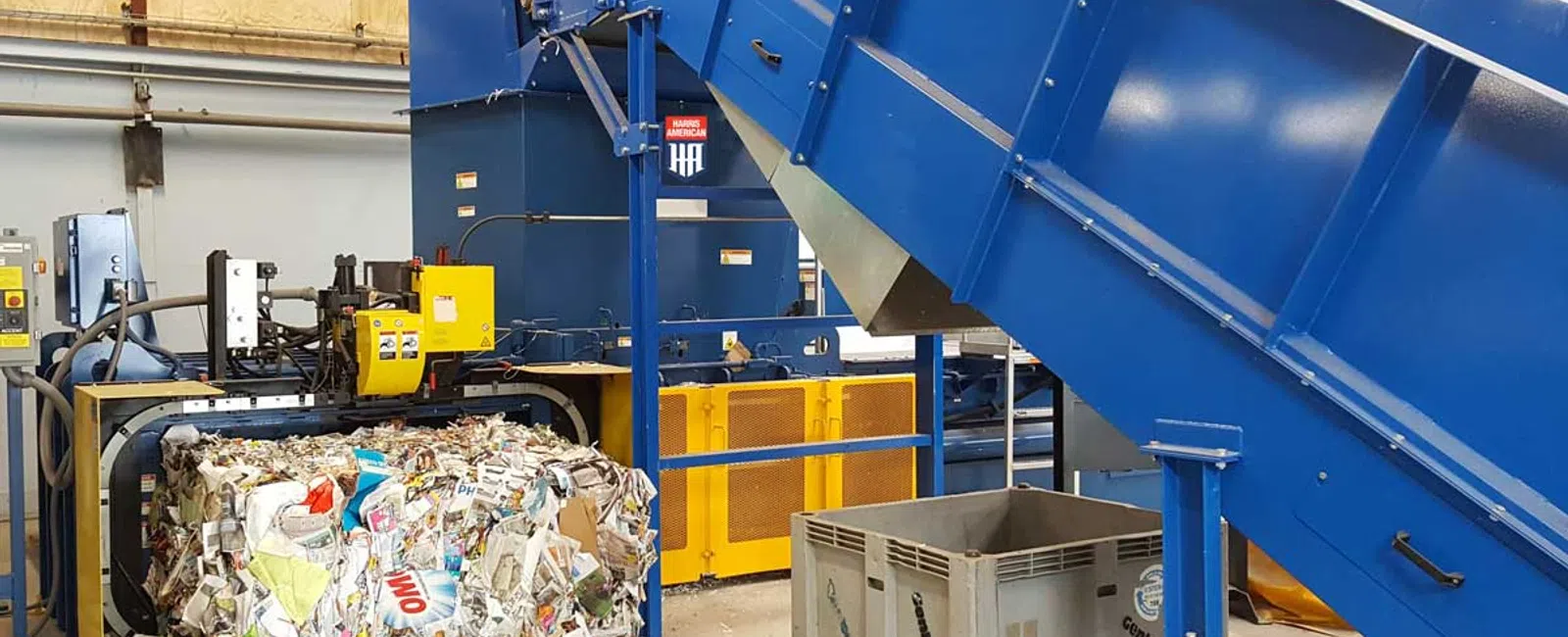
What Compaction Equipment Actually Does
A compactor machine squeezes waste between a hydraulic ram and a wall, reducing volume by a factor of 4 to 8 (sometimes higher for specific materials and machine types). The result is fewer hauler pulls, fewer overflow fees, less labor moving trash around the property, and a cleaner dock area.
Different waste streams call for different compaction equipment. Wet vs dry, dense vs bulky, recyclable vs landfill-bound, oversized vs uniform. Knowing the types of trash compactors available is the foundation of picking the right one for your operation.
Stationary Compactors
A stationary compactor stays bolted to a concrete pad and pushes waste into a separate roll-off container. When the container is full, the hauler swaps it for an empty one. The compactor itself never moves. Best for dry, heavy, high-volume waste streams like manufacturing scrap, packaging waste, and general dry trash. You see stationary compactors at distribution centers, manufacturing plants, large retail back-of-house, and municipal transfer stations. The configuration works anywhere you have an outdoor pad, three-phase electrical service, and the dock space for a roll-off container.
Self-Contained Compactors
Self-contained units fuse the compactor and the receiver container into a single sealed body. Best for wet waste streams: food service, grocery back-of-house, hospitality, healthcare, and any operation where leachate or odor would otherwise be a problem. The sealed design keeps liquid in and pests out, which is the entire reason self-contained units exist. When the unit is full, the whole thing rolls onto the hauler's truck and gets swapped out. The footprint is similar to a stationary compactor, but the sealed design makes it the right call wherever wet waste is in the mix.
Vertical Compactors
Vertical compactors compress waste downward into a chute or removable container. Small footprint, lower throughput, manual feed. These are the right fit for back-of-house retail, restaurants, smaller offices, and any tight space with steady but modest waste flow. They will not handle the volume of a stationary or self-contained unit, but they handle what they are sized for at much lower capital cost and a tiny footprint.
Screw Compactors
Screw compactors use a rotating auger to compress material into a container, and they do something most other compactor types cannot: separate liquid from solid in a single pass. That dewatering capability matters for foam (EPS), plastic film, organic waste, food processing waste, and any stream where the customer at the end of the line pays by dry weight. Crigler's RUNI Screw Compactor line is purpose-built for this. It turns bulky low-value waste into dense, recyclable material that often has resale value. Strong fit for printing operations, packaging converters, food processing, and any operation drowning in foam packaging.
Pre-Crush and Combined Configurations
Some operations get more out of their compactor by pre-shredding the waste first. Oversized boxes, rigid cartons, and large items jam compaction chambers and slow throughput. The BloApCo Piggyback Shredder mounts directly above a compactor (or baler) and gravity-feeds pre-shredded material into the chamber below, eliminating the need for a secondary conveyor. The compactor then handles the rest at full throughput. If oversized items are slowing your line, this combination usually pays for itself fast.
How to Pick the Right One for Your Facility
The right compactor for your operation usually picks itself once you answer six questions:
- Is your waste mostly wet, mostly dry, or a mix? Wet waste points toward self-contained or screw. Dry waste points toward stationary or vertical.
- What is your daily or weekly waste volume? High volume points toward stationary or self-contained. Moderate volume points toward vertical.
- What footprint and electrical service can you dedicate? Tight indoor space points toward vertical. An outdoor pad with three-phase service opens up the bigger units.
- What is your current hauler pull frequency, and what would you like it to be? More pulls today means bigger savings from compaction.
- Is your goal landfill diversion, dewatering and recycling, or just lower hauling cost? Screw compactors are the recycling and dewatering play. The others are mostly cost-reduction.
- Is your waste stream consistent or seasonal? Seasonal spikes (holiday returns, harvest, manufacturing runs) may justify a bigger unit than your average volume suggests.
If a couple of those questions have multiple right answers, you may be looking at a combination: a stationary or self-contained for general waste plus a vertical baler or screw compactor for a specific recyclable stream. For operations that want the whole material flow designed end to end, our custom waste handling systems team can spec the right combination.
Talk to Someone Who Has Installed All of These
Crigler has been specifying, installing, and servicing compactors of every type across Georgia, Florida, and Alabama since 1972. We work with multiple manufacturers, and we can pair compactors with balers, shredders, and conveyance to build a full waste handling line. Our service fleet is the largest in the Southeast, which matters as much as the equipment itself once a unit is in production.
Need help picking the right equipment for your operation? Reach us through our contact form or call for more information.


