
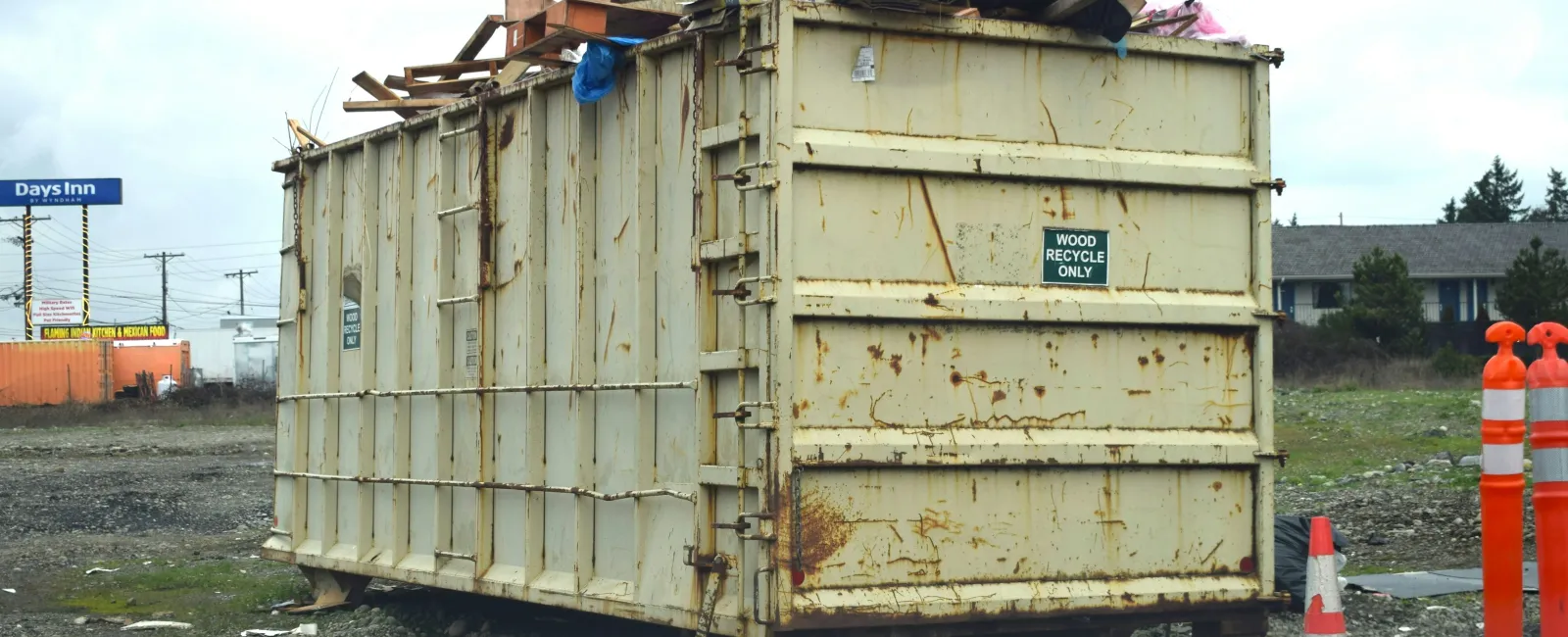
If your business generates real waste volume, your dumpster bill is probably bigger than you think. Container rental looks small on the monthly invoice, but pull fees, tipping charges, surcharges, and overflow penalties add up to something most CFOs would flag if it sat on a single line. Stretch that over five years and the obvious question follows: is there a smarter alternative to a dumpster? For a lot of operations there is, and the math works. A commercial trash compactor reduces your waste volume before it leaves the property, which means fewer pulls, lower hauler fees, and a more predictable monthly waste line.
What You Are Actually Paying for with a Dumpster
Dumpster cost is rarely just one number. Pull a year of your hauler invoices and you will usually see some mix of these line items:
- Container rental (a flat monthly fee whether the dumpster is full or empty)
- Pull or pickup fees (charged each time the hauler empties the container)
- Tipping or disposal fees (per ton or per haul at the landfill or transfer station)
- Overflow fees when waste goes outside the dumpster
- Contamination fees if recyclables or restricted material end up in the wrong stream
- Fuel surcharges that move with diesel pricing
- Extra-pickup fees during peak periods like holiday returns or seasonal production runs
Most operations look at the rental line and assume that is the cost. The actual cost is usually two to three times that number once everything else is rolled in.
What You Are Paying for with a Commercial Trash Compactor
On the commercial trash compactor side, the cost structure looks very different. There is a real upfront capital expense, but the ongoing operating cost is modest and your hauler bill drops significantly. The categories to plan for:
- Capital purchase, or a financing or lease payment if you spread it out
- Installation, including electrical work, pad prep, and any rigging
- Electric power consumption (real, but small relative to hauler savings)
- Preventive maintenance and the occasional repair across the equipment's lifecycle
- A receiver container or roll-off box for stationary configurations
- Hauler fees, but at dramatically reduced pull frequency
The first year tends to look expensive on paper because the capital purchase lands all at once. Years two through five are where the math turns in your favor.
How Compaction Ratios Drive the Savings
A commercial or industrial garbage compactor typically achieves a compaction ratio between 4:1 and 8:1, depending on material type, machine class, and how the operator runs it. In practical terms, that means three to seven times more waste fits in the same container before it needs to be pulled.
If you currently pay for four dumpster pulls per week and a compactor cuts that to one, you have just eliminated 156 pulls per year. Multiply that by your per-pull fee, tipping cost, and associated surcharges, and the savings are significant. Operations with high pull frequency hit break-even fastest, sometimes inside two to three years. Operations with one pull per week or less may not justify the capex. Break-even depends on your current pull frequency, your hauler fees, and the compactor configuration you choose. A local distributor should be able to model the comparison using your actual invoices.
What Is the Alternative to a Dumpster?
If you are looking at the dumpster line on your waste invoice and asking what is the alternative to a dumpster for your specific operation, you have a few realistic options:
- Self-contained commercial trash compactor: the compactor and the receiver container are one sealed unit. Best for wet waste (food service, grocery, hospitality) because nothing leaks.
- Stationary industrial garbage compactor: the compactor stays on a pad and pushes waste into a separate roll-off container that the hauler swaps out. Best for dry waste and high-volume operations.
- Vertical compactor: small footprint, lower volume, fed manually. A fit for tight spaces with steady but modest waste flow.
- Compactor plus a smaller dumpster for diverted waste: many operations run a compactor for general waste and keep a smaller dumpster or cardboard baler for recyclables.
When the Compactor Wins, and When It Does Not
A compactor usually wins when: you currently pay for three or more dumpster pulls per week, your dumpster regularly overflows between pulls, you are tight on space and cannot just add another dumpster, your waste stream is consistent and predictable, and you plan to stay at the location for at least five years.
Sticking with the dumpster makes more sense when: you have one pull per week or less, your waste volume swings wildly and unpredictably, you are in a short-term or temporary facility, you cannot dedicate the floor space or electrical service, or your capital budget is tight with no financing path.
Most operations land somewhere in between, and the right answer depends on running the actual numbers against your specific invoices. Packaging and distribution centers usually see the fastest payback, since their pull frequency runs the highest.
How to Actually Run the Comparison for Your Business
Pull your last 12 months of waste hauling invoices and add up every charge (rental, pulls, tipping, surcharges, overflow). That is your baseline. Get a quote for an industrial garbage compactor sized for your waste volume, including installation and estimated annual operating cost. Estimate your new pull frequency based on the compaction ratio. Compare the five-year totals. If you want help running this for your specific facility, the custom waste handling systems team can walk through it with you, and our maintenance and service coverage is built into the lifecycle cost so you are comparing apples to apples.
Talk to Someone Who Can Run the Numbers
A commercial trash compactor is not the right answer for every facility, but for businesses with steady waste volume, it is often the smarter alternative to a dumpster and pays itself off long before the five-year mark.
Need help comparing a commercial trash compactor to your current dumpster setup? Reach us through our contact form or call.


