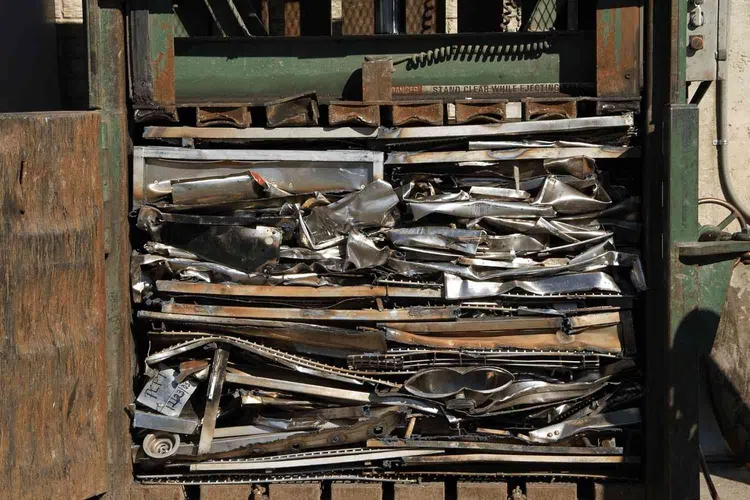

Stretch wrap is one of the largest waste streams at a distribution center after cardboard, and it is the one most often thrown away. It weighs almost nothing, fills dumpsters quickly, and drives up hauling pulls. It is also recyclable polyethylene film that commercial recyclers buy, but only when it arrives clean, sorted, and baled. Most stretch wrap ends up in the trash because nobody set up a way to collect it where it comes off the pallet.
We sell, install, and service balers and conveyors for packaging and distribution centers across the Southeast. The general steps for sorting and baling plastic are covered in our post on how to bale plastic waste. Stretch wrap has its own quirks, and they make the difference between a film program that earns a rebate and one that stalls out after a month.
Where Stretch Wrap Comes From in a Distribution Center
Most film comes off inbound pallets at receiving, where crews cut and strip wrap before putting product away. Outbound wrapping stations add roll ends, trim, and loads that were rewrapped. Returns processing adds more. Each of these spots produces clean film, and each one is a place where that film can end up in a trash can in a matter of seconds.
Collection works best when it happens where the film is removed. Place a film only bin or cart at every receiving door and wrapping station, label it clearly, and keep trash cans away from it so the two do not get mixed. Assign someone on each shift to empty the film bins at the baler. A program that depends on employees walking film across the building rarely lasts.
Sort Film Before It Reaches the Baler
Recyclers pay for film based on what is in the bale. Clear stretch wrap is usually the most valuable stream, because it can go into almost any recycled product. Colored and black film are made from the same material, but the pigment limits what they can become, and mixing them into a clear bale pulls the whole bale toward the lower price. Shrink wrap and stretch wrap are applied differently, and many buyers accept them in the same bale, but that is worth confirming before you start mixing them.
| Film Type | What It Is | How to Handle It |
|---|---|---|
| Clear stretch wrap | Polyethylene film applied to pallets under tension | Collect and bale on its own; usually the most valuable film stream |
| Colored or black stretch wrap | The same film with pigment added | Keep separate, or confirm your buyer accepts it mixed |
| Shrink wrap | Polyethylene film tightened around a load with heat | Often accepted with stretch wrap; confirm with your buyer |
| Poly bags and bag liners | Thin polyethylene film, often printed | Keep separate unless your buyer says otherwise |
| Bubble wrap and foam wrap | Structured protective packaging | Keep out of stretch wrap bales |
| Film with labels, tape, paper, or food residue | Contaminated film | Strip contaminants, or send heavily soiled film to the trash |
Labels, packing tape, paper slip sheets, plastic strapping, and corner boards all count as contamination in a film bale. Film that is wet, dirty, or coated with product residue lowers the value of everything around it. A quick check at the collection bin catches most of it before it gets compressed into the middle of a bale.
Why Stretch Wrap Is Hard to Bale
Loose stretch wrap is mostly air, and the film is elastic by design. When a ram compresses it, the film stores that energy and pushes back as soon as the pressure comes off. That spring back is why film bales come out loose, lose their shape on the dock, or break open in a trailer when the baler or the loading method is not right for film.
Loading technique makes a large difference. Large sheets dropped into the chamber trap pockets of air that the ram has to fight. Folding or rolling film before it goes in, and loading the chamber in even layers, produces a denser bale with less work. Ties matter too. Film bales stay under constant expansion pressure, so the wire or strapping has to be strong enough and tensioned well enough to hold them closed. Ask your buyer which they prefer before you stock supplies.
Choosing a Baler for Stretch Wrap
A distribution center with moderate film volume can often run a vertical baler at the receiving dock, close to where the film comes off. Keeping the baler near the source is what keeps the program running, since film that has to travel across the building tends to get thrown away along the way. Our overview of how a baler works explains the basic differences between machine types.
Facilities with heavy film volume, or that already run a horizontal baler for cardboard, have other options. A closed door horizontal baler can switch between cardboard and film runs, as long as the chamber is cleared between materials so fiber does not end up in film bales. An auto tie baler fits steady, high volume streams where material arrives continuously, often on a conveyor system. Our comparison of auto tie and closed door balers covers how each one handles changing materials.
One thing to raise when sizing equipment: a baler chosen for cardboard does not always reach the density film needs. Ram force, chamber size, and the tying system all affect how well a machine holds film. When we help a facility choose industrial balers, we look at the film stream along with the cardboard so one machine is not undersized for half the job.
Finding a Buyer for Baled Film
Film buyers include plastic recyclers, brokers, and some waste haulers that run commercial film programs. Before you commit, ask what bale size and weight they accept, how they want clear and colored film separated, if stretch and shrink wrap can share a bale, and what contamination limits they set. Ask about minimum load sizes as well, since that tells you how many bales you will need to store between pickups.
Prices for film move with resin markets, so revenue varies over time. Even when prices are soft, a working film program usually cuts dumpster pulls, because loose stretch wrap takes up so much container space for so little weight.
Keeping a Film Program Running
Bale quality slips when a baler loses hydraulic pressure, when tying components wear, or when the chamber is not cleaned between materials. Loose bales are often the first sign a machine needs attention. Our repair and maintenance team services the balers and conveyors that keep film moving, and scheduled service keeps bale density consistent from one pickup to the next.
Frequently Asked Questions
Can stretch wrap be recycled?
Yes. Stretch wrap is polyethylene film that commercial recyclers turn into pellets for new film and other plastic products. It does not belong in curbside recycling, where film jams sorting equipment, so businesses send it to film recyclers in clean, sorted bales.
Is pallet wrap recyclable?
Pallet wrap is stretch wrap, and it is recyclable when it is clean, dry, and free of labels, tape, and paper. Most commercial buyers require it to be baled before pickup.
Can shrink wrap and stretch wrap be baled together?
Many recyclers accept both in the same bale because they are made from similar polyethylene. Some buyers want them separated, so confirm with your buyer before mixing them.
Is black stretch wrap recyclable?
Black and colored stretch wrap are recyclable, but they are usually worth less than clear film because the pigment limits how the recycled material can be used. Baling them separately protects the value of your clear film.
Do I need a separate baler for stretch wrap?
Not always. A facility with a horizontal baler can often run film and cardboard in separate loads. A dedicated vertical baler at the receiving dock makes sense when film volume is steady and the main baler is far away or already running at capacity.
Get the Right Baler for Your Stretch Wrap
At Crigler Enterprises, we have sold, installed, and serviced recycling equipment since 1972, and we run the largest recycling equipment service fleet in the Southeast. We help distribution centers size, install, and maintain balers and conveyors that handle both cardboard and stretch wrap, so film leaves your dock as a product instead of trash.
Call 404-874-4401 or reach our team through the Crigler contact page.