
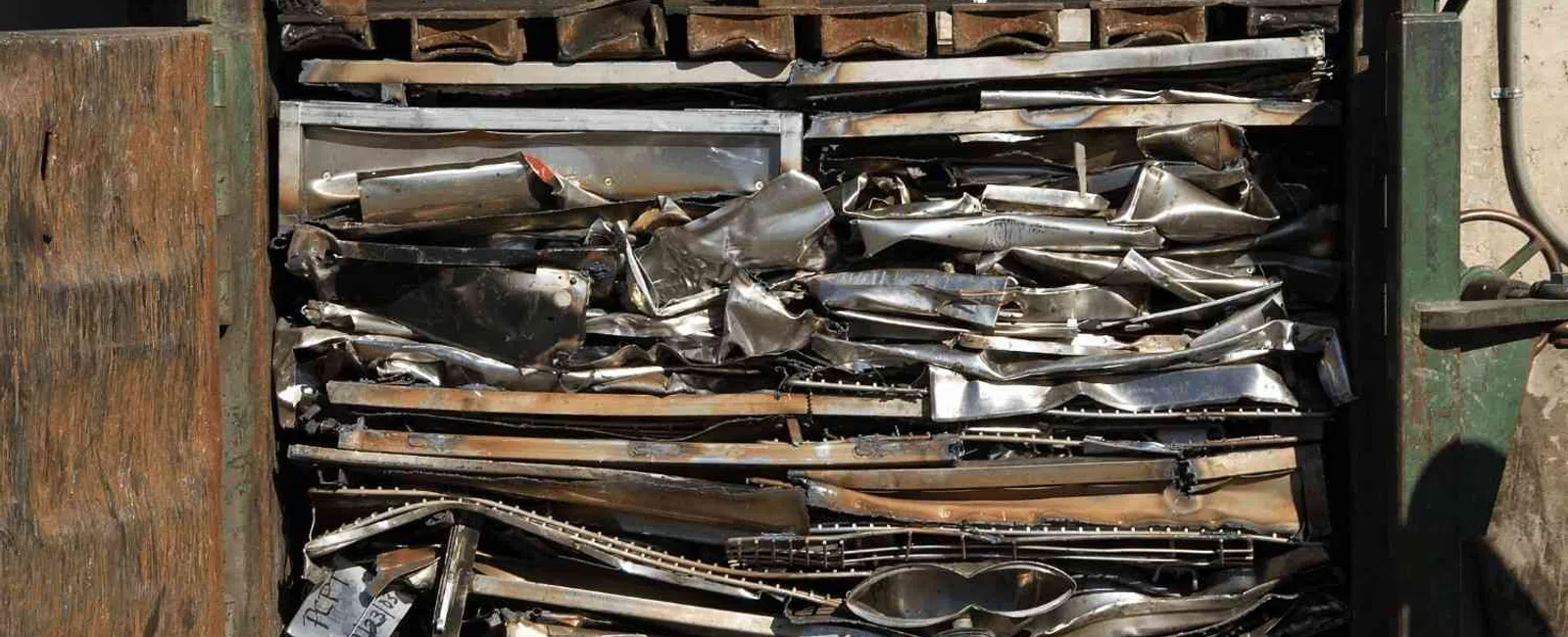
If you handle non-ferrous metals at any real volume, your baler decision matters more than it does for most other waste streams. Aluminum, copper, brass, and other non-ferrous materials are dense, valuable, and are paid by bale weight and spec at the mill. The wrong baler costs you on every single load.
Standard horizontal and vertical balers will produce a bale that holds together and ships, but for many non-ferrous metal recycling operations, a two-ram baler delivers more density, faster cycle times, and the mill-spec consistency that turns into real revenue.
A Quick Primer on Ferrous vs Non-Ferrous
Ferrous metals contain iron. Steel, cast iron, rebar, and structural beams fall in this category, and they are usually heavy enough that scrap yards process them with shears, loggers, or shredders rather than balers. Non-ferrous metals contain no iron. Aluminum, copper, brass, lead, and zinc are the big ones, and stainless steel is typically grouped with non-ferrous metals because its nickel and chromium content drives its value.
The ferrous vs non ferrous distinction matters for baler selection because non ferrous metals are softer, more compressible, and bale up tighter. They also carry significantly higher per-pound value, so bale density and spec accuracy directly affect what the mill or broker pays you. Sloppy bales lose money on every load.
What a Two-Ram Baler Actually Does Differently
A standard single-ram horizontal baler pushes material in a straight line through a closed chamber, with the bale ejected in the same direction it was compressed. A two-ram baler uses a primary compression ram plus a perpendicular cross-ram that ejects the finished bale to the side. The open-ended chamber design lets you bale longer material, switch between material types mid-shift, and produce consistent bale dimensions regardless of what is going on.
Two-ram balers also run faster cycle times and handle higher throughput than equivalent single-ram units. For mixed non-ferrous material (aluminum UBC, extrusions, sheet, occasional wire), the two-ram handles the variety without operator workarounds.
When a Two-Ram Baler Wins for Non-Ferrous
A two-ram is usually the right call in these situations:
- High volume. If you are producing more than 10 tons per day of non-ferrous material, a single-ram horizontal will struggle to keep pace.
- Mixed materials. Aluminum cans, extrusions, sheet, and even loose wire can all run through the same line.
- Mill-spec density. Two-ram pressures get aluminum UBC into the 30-50 lb/ft³ range, where the best mill pricing kicks in.
- Uniform bale dimensions. Mills prefer consistent bales for stacking, tracking, and trailer loading. Two-rams deliver that consistency regardless of feedstock.
- Long material. Extrusions, structural pieces, and copper bus bar fit through the open-ended chamber without pre-shearing.
- Continuous operation. Shear-baler-logger configurations built on two-ram chassis can shear, bale, and eject without operator intervention.
When the buyer at the other end is paying by density and spec, the two-ram is the equipment that gets you there.
When a Standard Baler Makes Sense for Non-Ferrous
Standard horizontal and vertical balers still earn their place in plenty of non-ferrous operations:
- Lower volume. If you are running less than 5 tons per day, a single-ram horizontal baler, or even a vertical one, handles the load well.
- Single material stream. If your operation only bales aluminum cans, a sized-to-UBC vertical or single-ram horizontal is usually sufficient.
- Capex constraints. Standard horizontals run significantly less than two-rams, and the gap shows on the balance sheet.
- Footprint constraints. Two-rams need more floor space and ceiling height than standard horizontals.
- Starter setup. Many scrap yards begin with vertical balers for cans, scale up to single-ram horizontals as volume grows, and move to two-ram only when throughput justifies it.
Bale Spec Realities by Material
The right baler also depends on what you are actually baling and what the mill expects:
- Aluminum UBC: Typical mill spec is 1,200 to 1,500 lb bales at 30 to 50 lb/ft cubed density. Two-ram delivers this consistently; standard horizontals can hit it on the low end with the right configuration.
- Aluminum extrusions: Tighter, denser bales are preferred, and the two-ram density advantage shows. Long extrusions also benefit from the open-ended chamber.
- Copper bales: Density matters less than grade purity, but tight bales reduce transport cost per pound. Either baler type works if the grade separation is clean.
- Brass: Yellow brass vs red brass grading is more important than baler choice. Standard horizontals are usually sufficient unless volume justifies the upgrade.
- Mixed light non-ferrous: Two-ram is the clear choice because variety is the whole point of the operation.
How to Decide for Your Operation
Six questions usually clarify the right choice:
- What is your monthly non-ferrous tonnage, and how is it trending?
- Is your stream single-material (cans only) or mixed (cans plus extrusions plus sheet)?
- What is the longest piece of material you regularly handle?
- What density and bale weight does your mill or broker reward?
- What floor space, ceiling height, and electrical service can you dedicate?
- What is your capex budget, and how soon do you need the equipment in production?
Talk to Someone Who Specs Both
Crigler has been specifying, installing, and servicing balers of every configuration for scrap yards across Georgia, Florida, and Alabama since 1972. We carry two-ram balers, standard single-ram horizontals, and vertical balers, and we can put together a custom non-ferrous handling line that matches your tonnage, your material mix, and your mill spec. The right baler for your operation depends on the numbers, and we are glad to walk through them with you.
Need help picking the right equipment for your operation? Reach us through our contact form or call us today.


