
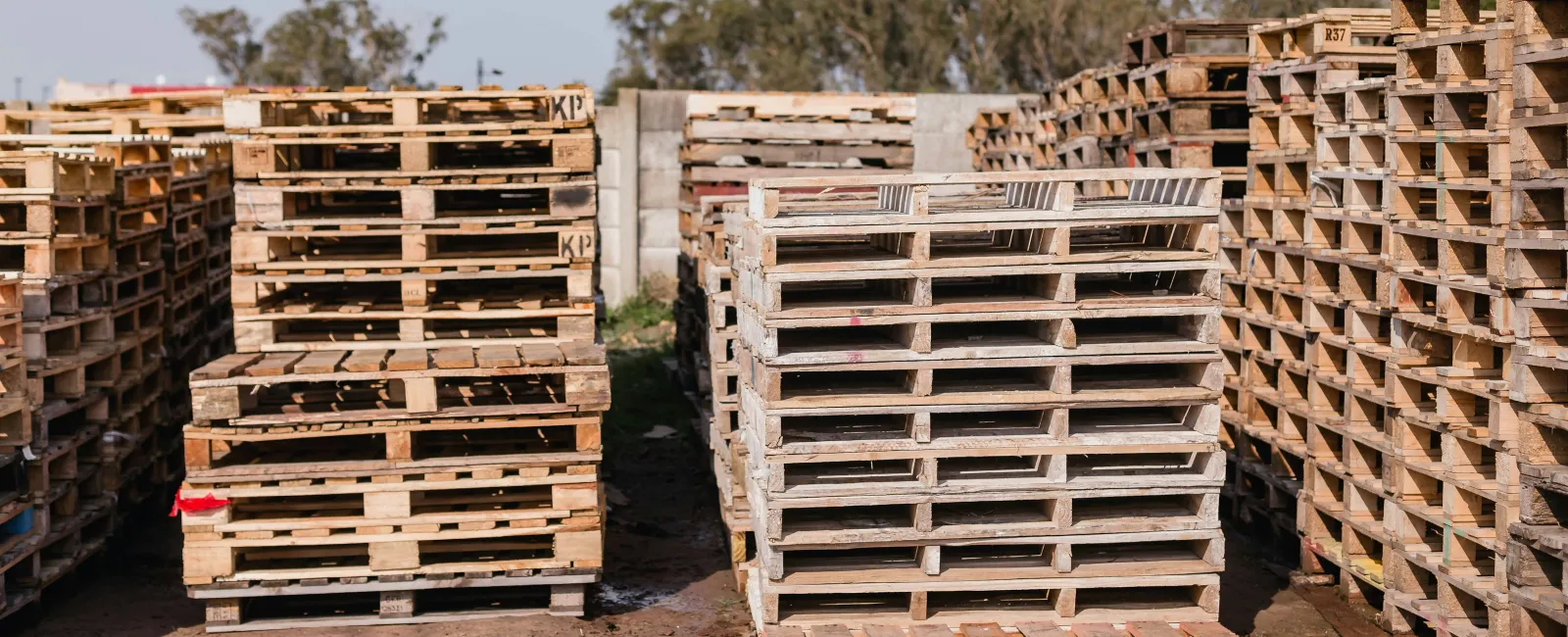
Wood pallets are one of the biggest hiding-in-plain-sight waste streams in industrial operations. Over 500 million new pallets get produced in the US every year, and a meaningful chunk of those end up damaged, contaminated, or surplus before the year is out. For warehouses, manufacturers, and recycling centers staring at stacks of broken pallets, the question is usually "how do we get rid of these?" The better question is "how do we turn these into a revenue stream or usable material?" That is where a wood pallet shredder earns its keep.
Pallet Shredders and Pallet Grinders: What is the Difference?
The two terms get used interchangeably in marketing copy, but in practice, they describe different jobs. A pallet shredder is usually a low-speed, high-torque machine that breaks whole or partial pallets into chunks. Pallet grinders run at higher speeds and produce a finer output, often grading mulch or biomass material in a single pass. Many operations stage both in series: shredder first for size reduction, grinder second for finishing.
Whatever you call the machine, the work has the same shape: reduce the pallet to a manageable size, pull out the embedded metal (nails, staples, occasional bolts), and pass the clean wood downstream to whoever pays for it. The end market drives the sizing, the throughput, and the level of secondary processing.
Where Does Shredded Pallet Wood Go?
Pallet wood has more downstream uses than most operators realize. The right end market depends on your geography, your output spec, and your willingness to invest in secondary processing.
- Landscape mulch (the highest-value market when output is colored and screened to spec)
- Biomass fuel for boilers, kilns, and combined heat and power plants
- Animal bedding for poultry, equine, and dairy operations
- Particleboard and engineered wood feedstock
- Pellet fuel manufacturers
- Compost and soil amendment producers
- Civil engineering aggregate and bulk fill
Each market has different requirements for size, moisture, ash content, and contamination. Mulch buyers want consistent fiber and clean color. Biomass buyers care about ash and metal content. Bedding buyers want screened material below a moisture threshold. Scope the buyers before you size the machine.
Questions to Answer Before You Buy a Pallet Shredder
Get clear on these before you talk to anyone about specs:
- What is your target throughput? Pallets per hour, or tons per day?
- Are you feeding whole pallets, broken pallets, or a mix?
- What output size does your end market actually require?
- How will you handle the metal? Most pallet shredders need a downstream magnetic separator and a wire/staple capture system.
- Stationary or mobile? Mobile rigs make sense if you process at multiple sites; stationary fits a centralized operation.
- What is your available electrical infrastructure? Low-speed, high-torque machines pull serious three-phase power.
- How much floor space do you have, including room for conveyors and downstream screening?
- What is the wear-part replacement schedule, and what do replacements run? Nails are tough on cutters.
- What fire and dust suppression do you need? Wood dust plus hot bearings is a real ignition risk.
Rent or Buy?
Pallet shredder rental makes sense in a few specific situations. If you are running a site cleanup, working through a one-time facility shutdown, or evaluating whether to commit to permanent equipment, a short-term rental can answer the question without locking in a major purchase. Rental rates vary by region and machine class, and most rental setups skew toward mobile units that show up on a trailer.
For ongoing operations, the math usually favors owning. If pallet processing is a regular part of your business, monthly rental costs add up fast against the price of a stationary or portable machine you control. Operations that fit the buy case include pallet recyclers as a primary business, manufacturers with consistent pallet waste from inbound freight, and scrap yards adding pallet wood as a secondary revenue stream alongside metal.
End-market Spec Drives the Equipment Choice
The same rule that applies to tire shredding applies here: the buyer at the end of your line dictates everything upstream. A pallet grinder set up to produce uniform colored mulch is a different machine from a low-speed pallet shredder cutting biomass chips for a power plant. Sample your end market, get the spec in writing, then size the shredder, grinder, screens, and magnetic separators against that spec.
Operations that get this wrong usually end up with a machine that produces material the market does not actually want, and a yard full of inventory they cannot move. Operations that get it right tend to lock in one or two anchor buyers first, then build the line around what those buyers pay for.
Talk to Someone With Experience
Crigler can spec, install, and service the full pallet processing line. We carry American Pulverizer's TRS Series low-speed, high-torque shredders (built for wood, pallets, tires, scrap metal, and similar tough materials) and the Weima single-shaft shredder for facilities that need a different cutting profile. Both pair with magnetic separators, conveyors, and downstream screening to build a complete pallet line. For operations that want the whole system designed end-to-end, our custom waste handling systems team handles the layout, throughput, and material flow.
We have been installing and servicing this kind of equipment since 1972, and our service fleet is the largest in the Southeast. The right pallet shredder for your operation depends on your volume, your end market, and your facility.
Need help picking the right equipment for your operation? Reach us through our contact form or give us a call.


