
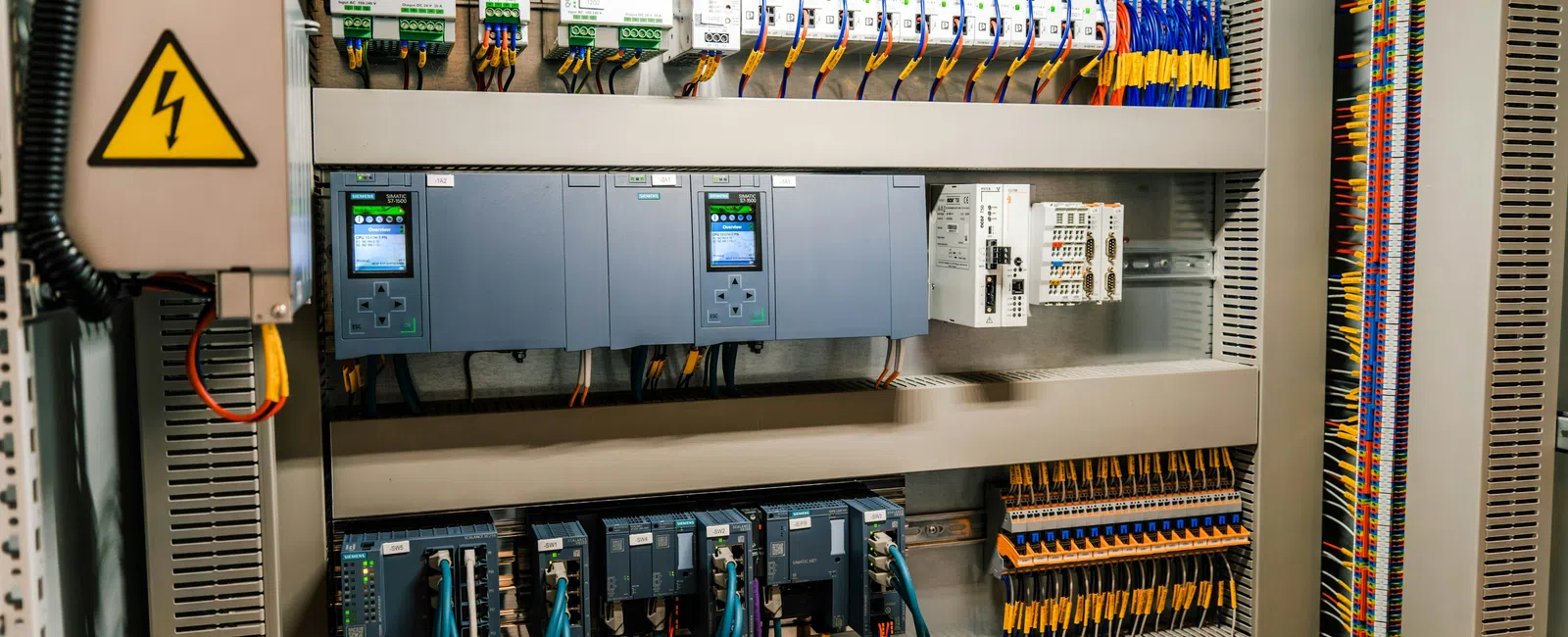
When a baler stalls mid-cycle or a conveyor refuses to restart, the problem often traces back to one box on the wall: the PLC control panel. It rarely gets attention until something goes wrong, yet it decides how every motor, sensor, and safety device on your line behaves.
What a PLC Control Panel Actually Is
A PLC, or programmable logic controller, is an industrial computer built for the factory floor. The control panel is the enclosure that houses the control unit, power supply, wiring, relays, and input and output modules that connect it to your machine. Picture the PLC as the decision-maker and the panel as its home and nervous system. Every automated baler relies on this controller to run its cycle, which is exactly why your baler needs a PLC to safely compress a single bale.
Unlike a desktop computer, an industrial PLC control panel is built to survive dust, vibration, heat, and the electrical noise of a working recycling plant. That durability matters when the same box has to run a 60-horsepower baler through thousands of cycles a day without flinching.
How the Panel Runs Your Recycling Equipment
Every automated action on your line passes through the panel. The PLC reads signals from sensors and operator buttons, then fires outputs that tell motors, valves, and rams what to do next. On a baler, that means starting the compression cycle, holding pressure, and ejecting the bale at the right moment. On a shredder, it can shut the machine down the instant it senses an overload or a full chamber.
A few of the jobs a PLC control panel handles behind the scenes:
- Starting and stopping motors in the correct order so nothing jams or overloads
- Timing cycles and adjusting RAM speed based on material volume
- Coordinating handoffs between machines, so a conveyor feeds a baler at the right pace
- Triggering safety interlocks that stop equipment when a guard opens, or an e-stop is pressed
- Logging faults so your team can see what failed and why
That last point is a quiet game-changer. Modern controls tell you where a fault happened instead of leaving your technicians guessing at 2 a.m.
What Lives Inside an Industrial PLC Control Panel
Open the door, and you will find a handful of parts working together. The PLC itself sits at the center. Around it are the power supply, input and output modules, motor starters or variable-frequency drives, relays, and often an HMI (human-machine interface), so operators can run the machine from a screen rather than a bank of buttons.
A quality panel is more than a pile of components in a box. The layout, wiring, and labeling decide how fast a technician can diagnose a problem during a night shift. This is why the reputation of the PLC control panel manufacturer matters as much as the parts inside. A well-built industrial panel saves hours every time something needs attention.
Why Aging Controls Drag Down Uptime
Older PLCs were dependable in their day, but parts get discontinued, programming software becomes obsolete, and finding a technician who knows a legacy platform gets harder every year. When a twenty-year-old controller fails, you may be waiting on a part that no one stocks.
The symptoms tend to show up gradually: slower response, nuisance faults, cycles that no longer run smoothly, and downtime that creeps up quarter after quarter. For a plant director watching throughput numbers, those small losses add up to real money and missed shipments.
None of this means you should open the panel and start swapping parts yourself. Industrial control work carries real electrical and safety risks, and a single wiring mistake can turn a small issue into a dangerous one. Diagnosis and repair belong with a qualified controls team, backed by a full service and refurbishment operation that can get your line running again quickly.
When to Upgrade Instead of Replace
The upside of a PLC problem is that you rarely need a whole new machine to fix it. A control upgrade modernizes the brain of your equipment while keeping the baler, shredder, or conveyor frame you already own. That comes at a fraction of the cost and disruption of a full replacement.
A few signs it may be time to modernize your controls:
- Replacement parts for your current PLC are hard to source
- Your system cannot integrate with newer sensors, drives, or an HMI
- Downtime and troubleshooting are eating into production
- Safety programming no longer meets current standards
Crigler Enterprises rebuilds control systems to meet today's automation and safety requirements through professional PLC upgrades, and our technicians work on equipment regardless of who originally installed it.
Choosing the Right PLC Control Panel Partner
A control panel is only as good as the people who design, build, and support it. For industrial recycling equipment, you want a partner who understands both the controls and the machines they run, from horizontal and vertical balers to conveyor systems and industrial shredders. That combination is what turns a box of components into reliable uptime.
If your controls are showing their age, or you simply want to know whether an upgrade makes sense for your operation, our team can evaluate your setup and lay out your options. Call Crigler Enterprises or reach us through our site to schedule a PLC evaluation. Fifty years of recycling equipment experience and the largest service fleet in the Southeast stand behind every panel we touch.


